
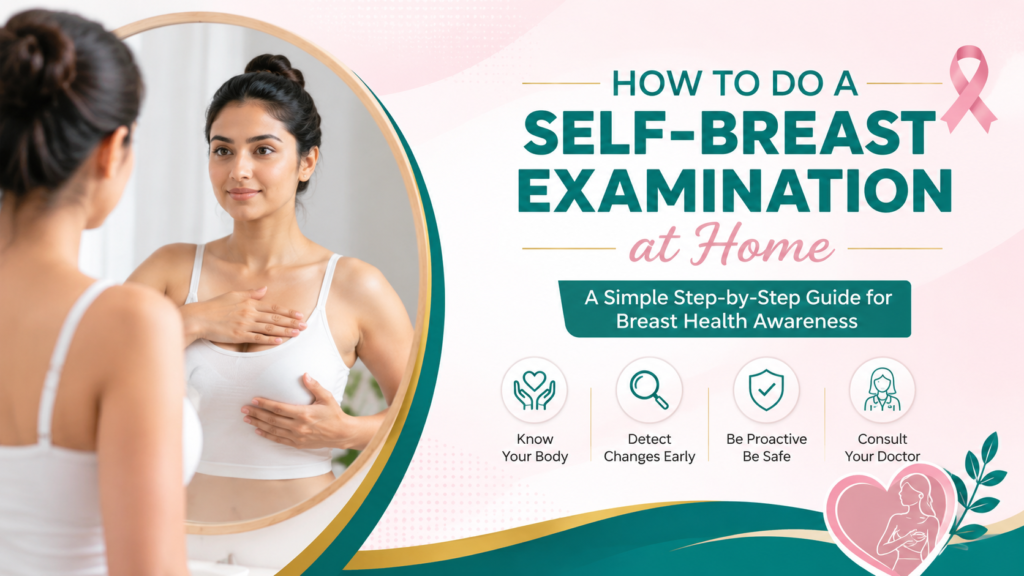
Breast health is a part of women’s overall health. A self-breast examination is a way that helps women know how their breasts normally look and feel. Regular self-checks can help find changes early and make women go see a doctor if needed. A breast self-examination at home does not replace doctor visits or medical screenings. It can make women more aware and help them notice changes quickly.
Why Is Self-Breast Examination Important?
A breast self-examination helps women:
- Know their breast structure
- Find unusual lumps or changes early
- Be more aware of their breast health
- Go see a doctor early if needed
When Should You Perform a Breast Self-Examination?
The best time to do a self-breast examination is:
- 5 to 7 days after your period ends
- On the date every month for women who no longer have periods
Hormonal changes during periods can make breasts feel sore or swollen so checking after the cycle gives more accurate results.
Step-by-Step Guide for Self-Breast Examination at Home
Step 1: Look at Your Breasts in the Mirror
Stand in front of a mirror with your shoulders straight and arms relaxed.
Check for:
- Changes in size or shape
- Skin. Puckering
- Redness or swelling
- Changes in nipple position
- Unusual discharge
Now raise your arms. Look again for any visible differences.
Step 2: Check While Standing
Use your fingertips to examine each breast
Move your fingers in:
- Motions
- Up-and-down patterns
- Side-to-side movements
Cover your whole breast area including:
- Upper chest
- Underarm area
- Around the nipple
Feel for:
- Lumps
- Thick tissue
- Painful areas
Step 3: Examine While Lying Down
Lie down on your back and put a pillow under one shoulder. Use the hand to examine the breast with gentle circular motions. Repeat for the side. This position spreads breast tissue evenly. Makes changes easier to find.
Changes You Should Never Ignore
See a doctor if you notice:
- A lump or thick tissue
- Swelling
- Persistent breast pain
- Skin irritation
- Nipple discharge
- Changes in breast size or shape
Not every lump means cancer. Any unusual change should be checked by a doctor.
Tips for Better Breast Health
- Eat healthy
- Exercise
- Don't smoke
- Limit alcohol
- Go for health screenings
- Follow your doctor’s advice for Breast Cancer Care
Common Myths About Breast Self-Examination
A lot of women do not do Breast Self-Examination because they believe some things that're not true. One big myth is that only women who are older need to check their breasts all the time. The truth is that women of all ages should be aware of their breasts because things can change at any time. Some people think that if they find a lump in their breast it is always cancer. That is not true. A lot of lumps are not cancerous. Can happen when hormones change or for other harmless reasons. However, if you notice something that's not normal you should always go see a doctor. Some women also think that checking their breasts by themselves is enough to take care of their Breast Cancer Care. That is not true. While checking your breasts by yourself can help you know what is normal you should still go see a doctor for checkups. Getting mammograms and clinical breast examinations from a doctor along with checking your breasts by yourself is the way to stay safe and find problems early. Women should know what their breasts normally look and feel like so they can notice if something changes. Knowing about breast health and how to take care of your breasts can help you feel less scared and more in control.
How Lifestyle Choices Affect Breast Health
- The way you live your life can help keep your breasts healthy and lower your chances of getting health problems. Even though you cannot prevent all breast problems, taking care of your body can help you feel better and stay healthy.
- Eating food that's good for you like fruits and vegetables can help keep you from getting sick. You should try to eat food that is not processed and limit the amount of sugar and bad fat you eat. These things can be bad for your body.
- Exercise is also very important. It can help you stay at a weight, make your blood flow better and keep your hormones in balance. Women who exercise often feel better. Are less likely to get sick.
- Smoking and drinking too much alcohol can be bad for your body and your breasts. Not doing these things can help you stay healthy.
It is also important to not be too stressed. When you are stressed, you might not sleep well your hormones can get out of balance. You might feel bad. Doing things, like yoga, meditation, walking and getting rest can help you feel better and less stressed. Going to the doctor taking care of yourself every day and doing Breast Self-Examination every month can all help you take care of your breasts and prevent Breast Cancer Care problems.
Conclusion
A Breast Self-Examination is a simple and important habit that can help women know their breast health. Doing checks at home takes only a few minutes and may help find unusual changes early. While self-examination is helpful, regular doctor visits and screenings are still important for Breast Cancer Care and early detection. Being aware of preventing problems and taking action on time are key to staying healthy.
Frequently Asked Questions (FAQs)
1. How often should I perform a Breast Self-Examination?
Women should perform a Breast Self-Examination once every month to become familiar with how their breasts normally look and feel.
2. What is the best time to do a Breast Self-Examination?
The best time is 5 to 7 days after your menstrual period ends. Women who no longer have periods can choose the same date each month.
3. Does finding a lump always mean breast cancer?
No. Many breast lumps are non-cancerous and may occur due to hormonal changes or other benign conditions. However, any new lump should be evaluated by a doctor.
4. Can a Breast Self-Examination replace mammograms or doctor checkups?
No. Breast Self-Examination is a helpful awareness tool, but it should not replace regular medical checkups, clinical breast examinations, or recommended mammograms.
5. What changes should I report to a doctor immediately?
You should consult a doctor if you notice a lump, swelling, persistent pain, nipple discharge, skin changes, or any unusual change in the size or shape of your breast.