
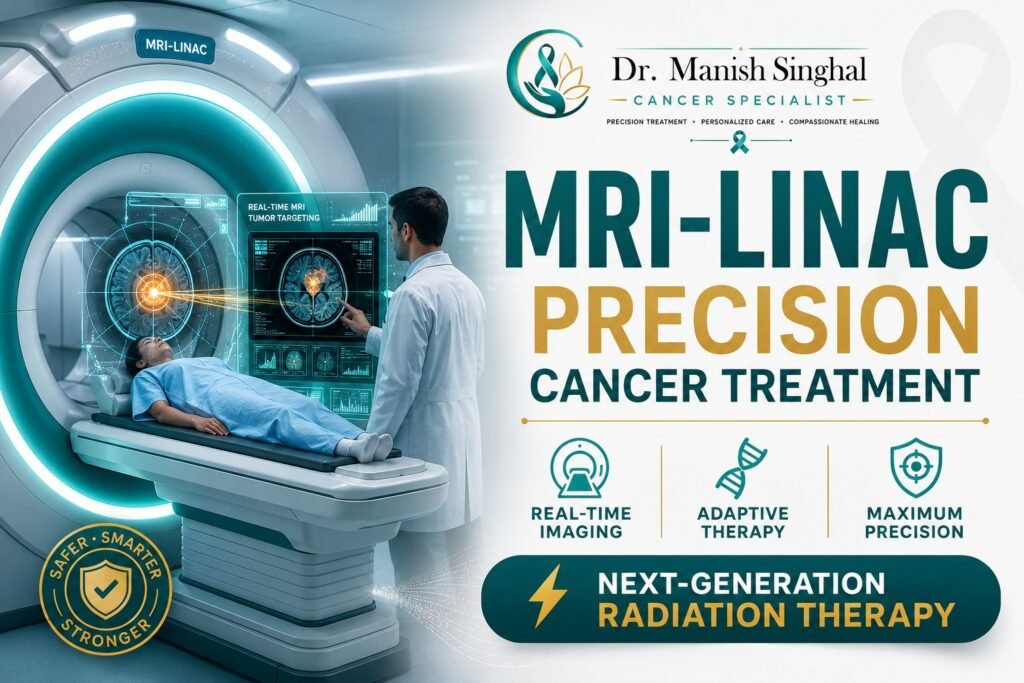
In recent years, oncology has witnessed remarkable advancements in the way cancer is diagnosed and treated. One of the most significant innovations is the MRI-LINAC system, which combines high-resolution magnetic resonance imaging (MRI) with a linear accelerator (LINAC) for radiation therapy. This technology is transforming how a Cancer Specialist in Noida approaches complex cancer cases by enabling highly precise, real-time tumor targeting.
For patients seeking expert care from a Cancer Doctor in Noida, understanding MRI-LINAC can provide clarity on why this treatment is considered one of the most advanced forms of radiation therapy available today.
What is MRI-LINAC?
MRI-LINAC is an integrated medical system that merges two powerful technologies:
- MRI (Magnetic Resonance Imaging): Provides detailed, real-time soft tissue imaging.
- LINAC (Linear Accelerator): Delivers high-energy radiation beams to destroy cancer cells.
When combined, these technologies allow oncologists to visualize the tumor during treatment and adjust radiation delivery in real time. This ensures that radiation is directed precisely at the tumor while minimizing exposure to surrounding healthy tissues.
This precision is especially valuable in cancers where tumors are located near critical organs or where they move during breathing or digestion.
Why MRI-LINAC is a Breakthrough in Cancer Care
Traditional radiation therapy relies on pre-treatment imaging. However, tumors are not static—they can shift position between sessions or even during treatment. MRI-LINAC addresses this challenge by enabling real-time imaging during radiation delivery.
A skilled Cancer Specialist in Noida may recommend MRI-LINAC in cases where:
- Tumors are difficult to visualize using conventional imaging
- Tumors are located near sensitive organs such as the liver, pancreas, or prostate
- High precision is required to reduce side effects
- Adaptive treatment planning is needed over multiple sessions
This adaptive capability allows doctors to modify the treatment plan based on daily tumor changes, improving both safety and effectiveness.
How MRI-LINAC Treatment Works
1. Detailed Imaging
Before treatment begins, high-resolution MRI scans are performed to identify the exact location, size, and shape of the tumor.
2. Treatment Planning
A Cancer Doctor in Noida works with a multidisciplinary oncology team to design a personalized radiation plan based on tumor characteristics.
3. Real-Time Radiation Delivery
During each session, the MRI continuously images the tumor. If movement is detected, radiation is adjusted accordingly in real time.
4. Adaptive Therapy
The system allows modifications to the treatment plan over time. If the tumor shrinks or changes position, the radiation strategy is updated to maintain accuracy.
This dynamic approach significantly enhances treatment precision compared to conventional radiotherapy.
Benefits of MRI-LINAC in Cancer Treatment
1. High Precision Targeting
It delivers radiation directly to cancer cells while sparing surrounding healthy tissues, reducing the risk of complications.
2. Real-Time Monitoring
Continuous imaging ensures that even small tumor movements are tracked and corrected during treatment.
3. Reduced Side Effects
Since healthy tissues are better protected, patients often experience fewer radiation-related side effects.
4. Improved Outcomes in Complex Cancers
MRI-LINAC is especially beneficial for tumors in the pancreas, liver, prostate, and brain, where precision is critical.
5. Personalized Treatment Approach
Every treatment session can be adjusted based on tumor response, making therapy more individualized.
A qualified Cancer Specialist in Noida may consider this technology for patients who require highly targeted radiation therapy with minimal collateral damage.
Conditions Treated with MRI-LINAC
MRI-LINAC is used in various types of cancers, particularly where precision is essential:
- Prostate cancer
- Pancreatic cancer
- Liver tumors
- Lung cancer (selected cases)
- Brain tumors
- Recurrent or previously treated cancers
Not every patient is eligible for MRI-LINAC, and the decision depends on tumor type, location, and overall health condition. A Cancer Doctor in Noida evaluates each case carefully before recommending this treatment.
MRI-LINAC vs Traditional Radiation Therapy
| Feature | Traditional Radiotherapy | MRI-LINAC |
|---|---|---|
| Imaging | Pre-treatment only | Real-time during treatment |
| Precision | Moderate | Extremely high |
| Tumor Tracking | Limited | Continuous |
| Adaptability | Low | High |
| Side Effects | Variable | Generally reduced |
Role of a Cancer Specialist in Noida in MRI-LINAC Treatment
The success of MRI-LINAC depends not only on technology but also on clinical expertise. A Cancer Specialist in Noida plays a crucial role in:
- Diagnosing cancer accurately using advanced imaging and biopsy
- Evaluating whether MRI-LINAC is suitable for the patient
- Designing a personalized radiation plan
- Monitoring response to treatment over time
- Managing side effects and follow-up care
This multidisciplinary approach ensures that patients receive comprehensive and scientifically guided cancer care.
Future of MRI-LINAC in Oncology
MRI-LINAC represents a shift toward more precise and adaptive cancer treatment. Ongoing research is focused on improving imaging speed, expanding treatable cancer types, and integrating artificial intelligence to further refine radiation planning.
As technology evolves, a Cancer Doctor in Noida will increasingly rely on such advanced systems to deliver safer and more effective treatment outcomes.
Conclusion
MRI-LINAC is a major advancement in radiation oncology that brings together imaging and treatment in a single, highly precise system. By allowing real-time tumor tracking and adaptive therapy, it significantly improves the accuracy of cancer treatment while reducing harm to healthy tissues.
For patients, consulting a qualified Cancer Specialist in Noida or experienced Cancer Doctor in Noida is essential to understand whether this advanced therapy is suitable for their specific condition. With continuous innovation in medical technology, MRI-LINAC stands as a promising step toward more personalized and effective cancer care.