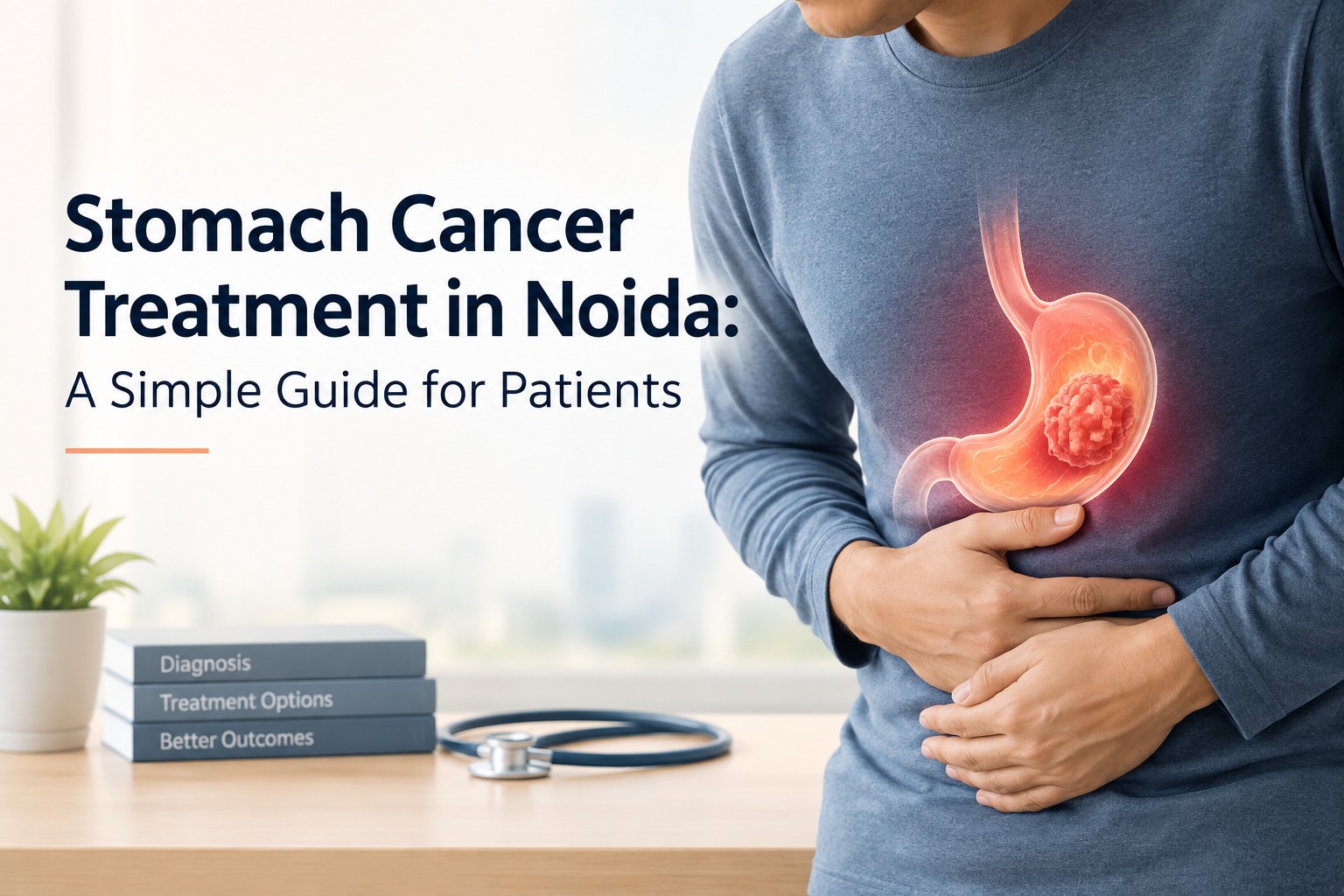
A diagnosis of stomach cancer can bring many questions to a patient and their family. What stage is cancer? Will surgery be required? Is chemotherapy necessary? Can radiation therapy help? What treatment is suitable for advanced stomach cancer? The answers depend on several factors, including the type and stage of cancer, its location in the stomach, whether it has spread to nearby lymph nodes or other organs, the patient's overall health, and certain characteristics of the tumour. If you are looking for stomach cancer treatment in Noida, understanding the treatment journey can make the process easier to navigate. Modern cancer care may involve a combination of surgery, chemotherapy, radiation therapy, targeted therapy and immunotherapy, depending on the individual diagnosis.
What Is Stomach Cancer?
Stomach cancer, also called gastric cancer, develops when abnormal cells in the stomach begin to grow uncontrollably. Most stomach cancers are adenocarcinomas, although other less common types can also occur. Stomach cancer may develop in different parts of the stomach and can sometimes grow without causing obvious symptoms during its early stages. This is one reason why persistent digestive symptoms should not simply be ignored, particularly when they continue or become worse.
Common symptoms may include:
Persistent indigestion or discomfort in the upper abdomen
Feeling full quickly after eating
Loss of appetite
Unexplained weight loss
Nausea or vomiting
Difficulty swallowing, particularly when the tumour is near the upper stomach
Persistent stomach pain
Weakness or tiredness
Blood in vomit or stool in some cases
These symptoms do not necessarily mean that a person has cancer. Several digestive conditions can cause similar problems. However, persistent or concerning symptoms should be evaluated by a qualified medical professional.
How Is Stomach Cancer Diagnosed?
Before deciding on treatment, doctors need to confirm the diagnosis and understand how far the disease has progressed.
The evaluation may include a combination of:
Upper GI Endoscopy
An upper gastrointestinal endoscopy allows the doctor to examine the lining of the stomach using a thin flexible tube with a camera. If an abnormal area is identified, a biopsy may be performed.
Biopsy
During a biopsy, a small sample of tissue is removed and examined in a laboratory. This helps confirm whether cancer cells are present and can provide information about the type of cancer.
Imaging Tests
Depending on the situation, imaging tests such as CT scans or other investigations may be recommended to assess the tumour and look for possible spread.
Staging and Biomarker Testing
Once stomach cancer is confirmed, staging helps determine how advanced the cancer is. Additional laboratory testing may also be important, particularly in advanced disease, to identify biomarkers that can influence treatment decisions. For example, testing may include markers such as HER2, PD-L1 and mismatch repair or microsatellite instability status in appropriate patients.
Why Does the Stage of Stomach Cancer Matter?
The stage of stomach cancer plays an important role in determining the treatment approach. Early-stage cancer may be treated differently from cancer that has spread to lymph nodes or distant organs.
Broadly, treatment planning may involve:
Early-stage disease: surgery or selected endoscopic procedures
Locally advanced disease: surgery combined with treatments such as chemotherapy before and/or after surgery
Advanced or metastatic disease: systemic treatments such as chemotherapy, targeted therapy and immunotherapy, depending on tumour characteristics
Therefore, there is no single treatment that is suitable for every patient.
Stomach Cancer Treatment Options
Treatment for stomach cancer is usually planned according to the patient's individual diagnosis. Depending on the stage and other factors, one or more treatment methods may be used.
1. Surgery for Stomach Cancer
Surgery is an important treatment option for many patients whose stomach cancer can be removed completely. The type of surgery depends on the tumour's location, size and extent. A surgeon may remove part of the stomach, known as a partial or subtotal gastrectomy, or the entire stomach, known as a total gastrectomy. Nearby lymph nodes may also be removed as part of the cancer surgery. For selected very early cancers, an endoscopic procedure may be considered instead of conventional surgery. Surgery is generally considered with the goal of removing the visible cancer and achieving appropriate cancer control when the disease is potentially curable.
2. Chemotherapy for Stomach Cancer
Chemotherapy uses medicines that travel through the bloodstream to destroy cancer cells or slow their growth. Chemotherapy may be recommended before surgery, after surgery or as part of treatment for advanced stomach cancer. When chemotherapy is given before surgery, it may help reduce the tumour or treat microscopic cancer cells that cannot be seen on scans. Chemotherapy after surgery may be used to reduce the risk of cancer returning in appropriate patients. The specific medicines and treatment schedule depend on the patient's cancer, overall health and treatment plan.
3. Radiation Therapy
Radiation therapy uses high-energy radiation to damage cancer cells and prevent them from growing. For selected patients with stomach cancer, radiation may be used alongside other treatments. Depending on the clinical situation, it may be considered before or after surgery or for advanced disease. Radiation therapy can also have a supportive role in some advanced cases, such as helping control symptoms caused by a tumour. Whether radiation is appropriate depends on the location and stage of the cancer and the treatments already received.
4. Targeted Therapy
Targeted therapy is designed to act on specific characteristics of cancer cells. Before using certain targeted medicines, doctors may recommend biomarker testing. For example, HER2 testing can help identify patients with HER2-positive gastric cancer who may be candidates for HER2-directed treatment. Other targeted approaches may be considered for selected patients based on specific tumour biomarkers. This is why modern stomach cancer treatment increasingly involves understanding the biological characteristics of the tumour rather than relying only on its location or stage.
5. Immunotherapy
Immunotherapy works by helping the body's immune system recognise and fight cancer cells. Certain immunotherapy medicines may be considered for patients with advanced or metastatic stomach cancer, depending on the tumour's characteristics and the overall treatment plan. Tests such as PD-L1 assessment or mismatch repair/microsatellite instability testing may provide useful information when doctors are considering systemic treatment. Immunotherapy is not appropriate for every patient, so treatment decisions should be made after a complete evaluation.
Treatment of Advanced Stomach Cancer
When stomach cancer has spread to distant organs or cannot be completely removed with surgery, treatment generally focuses on controlling the disease, slowing its progression, managing symptoms and maintaining quality of life. Depending on tumour characteristics, treatment may involve chemotherapy, immunotherapy, targeted therapy or combinations of these approaches. Biomarker testing becomes particularly important in advanced disease because certain results may open the possibility of specific targeted or immune-based treatments. In some patients, radiation therapy or other procedures may also be used to manage problems such as bleeding, pain or blockage caused by the tumour.
How Is the Right Treatment Plan Decided?
Choosing a treatment plan involves more than simply knowing that someone has stomach cancer.
Doctors may consider:
Cancer stage
Location and size of the tumour
Lymph node involvement
Whether the cancer has spread
Biopsy results
Biomarker test results
Previous treatments
Age and overall health
Nutritional status
Patient preferences and treatment goals
For this reason, patients should have a detailed discussion with their oncology team before starting treatment. If you are searching for a Best Cancer Doctor in Noida, Delhi NCR, it is important to focus on a specialist who can evaluate the complete clinical picture and explain the available treatment options clearly rather than choosing treatment based on a single factor.
What Can Patients Expect During Stomach Cancer Treatment?
Every patient's experience is different. Depending on the treatment plan, patients may undergo consultations, blood tests, imaging, biopsy or biomarker testing before and during treatment. Treatment response may also be monitored through clinical assessment and appropriate investigations. Side effects vary according to the treatment used. Chemotherapy, radiation therapy, targeted therapy and immunotherapy can have different side-effect profiles. Patients should report new or severe symptoms to their healthcare team rather than stopping treatment on their own. Nutrition is also an important part of stomach cancer care. Some patients may experience changes in appetite, digestion or their ability to eat normally, particularly after stomach surgery. A doctor or oncology nutrition specialist can provide individual guidance based on the patient's needs.
Why Choosing the Right Cancer Care Team Matters
Stomach cancer treatment can involve multiple specialists and different stages of care. Depending on the patient's condition, the treatment team may include a medical oncologist, surgical oncologist, radiation oncologist, pathologist, radiologist, nutrition specialist and other healthcare professionals. A coordinated approach can help ensure that diagnosis, staging, treatment and follow-up are considered together. Patients should also feel comfortable asking questions about the purpose of treatment, expected benefits, possible side effects, alternative approaches and follow-up requirements.
Follow-Up After Stomach Cancer Treatment
Completing treatment does not necessarily mean that medical care ends. Regular follow-up appointments may be recommended to monitor recovery, nutritional health, treatment-related effects and signs of recurrence. The exact follow-up schedule depends on the patient's diagnosis and treatment history. Patients should also discuss any new or persistent symptoms with their healthcare team rather than waiting for the next scheduled appointment.
Conclusion
Stomach cancer can be a complex disease, but treatment has become increasingly personalised. Depending on the stage and characteristics of the cancer, treatment may involve surgery, chemotherapy, radiation therapy, targeted therapy, immunotherapy or a combination of approaches. If you are considering stomach cancer treatment in Noida, the first step is a proper diagnosis and staging assessment. Once the complete clinical picture is available, your oncology team can discuss the treatment options most appropriate for your individual situation. Early medical evaluation, accurate staging, appropriate biomarker testing and coordinated cancer care can all play an important role in treatment planning.
Frequently Asked Questions
1. What is the main treatment for stomach cancer?
The treatment depends on the stage and characteristics of the cancer. Surgery is an important treatment for potentially removable stomach cancer, while chemotherapy, radiation, targeted therapy or immunotherapy may be used before, after or instead of surgery depending on the situation.
2. Is stomach cancer treatable?
Stomach cancer can be treated, and treatment goals depend largely on its stage and whether it can be completely removed. Early-stage disease may have different treatment goals and options compared with advanced or metastatic cancer.
3. Is chemotherapy always required for stomach cancer?
No. Chemotherapy is not automatically required for every patient. Its use depends on the stage, type of cancer, surgery plan, overall health and other clinical factors.
4. When is immunotherapy used for stomach cancer?
Immunotherapy may be considered for selected patients, particularly in advanced disease, based on factors such as tumour biomarkers and the overall treatment plan.
5. Can stomach cancer be treated without surgery?
In some situations, surgery may not be the appropriate treatment. Depending on the stage and tumour characteristics, doctors may use systemic treatments such as chemotherapy, targeted therapy or immunotherapy, along with other treatments when needed.
6. When should I consult a cancer specialist for stomach problems?
Persistent symptoms such as unexplained weight loss, ongoing upper abdominal discomfort, repeated vomiting, difficulty swallowing, loss of appetite or signs of bleeding should be medically evaluated. A doctor can determine whether further testing is necessary.