
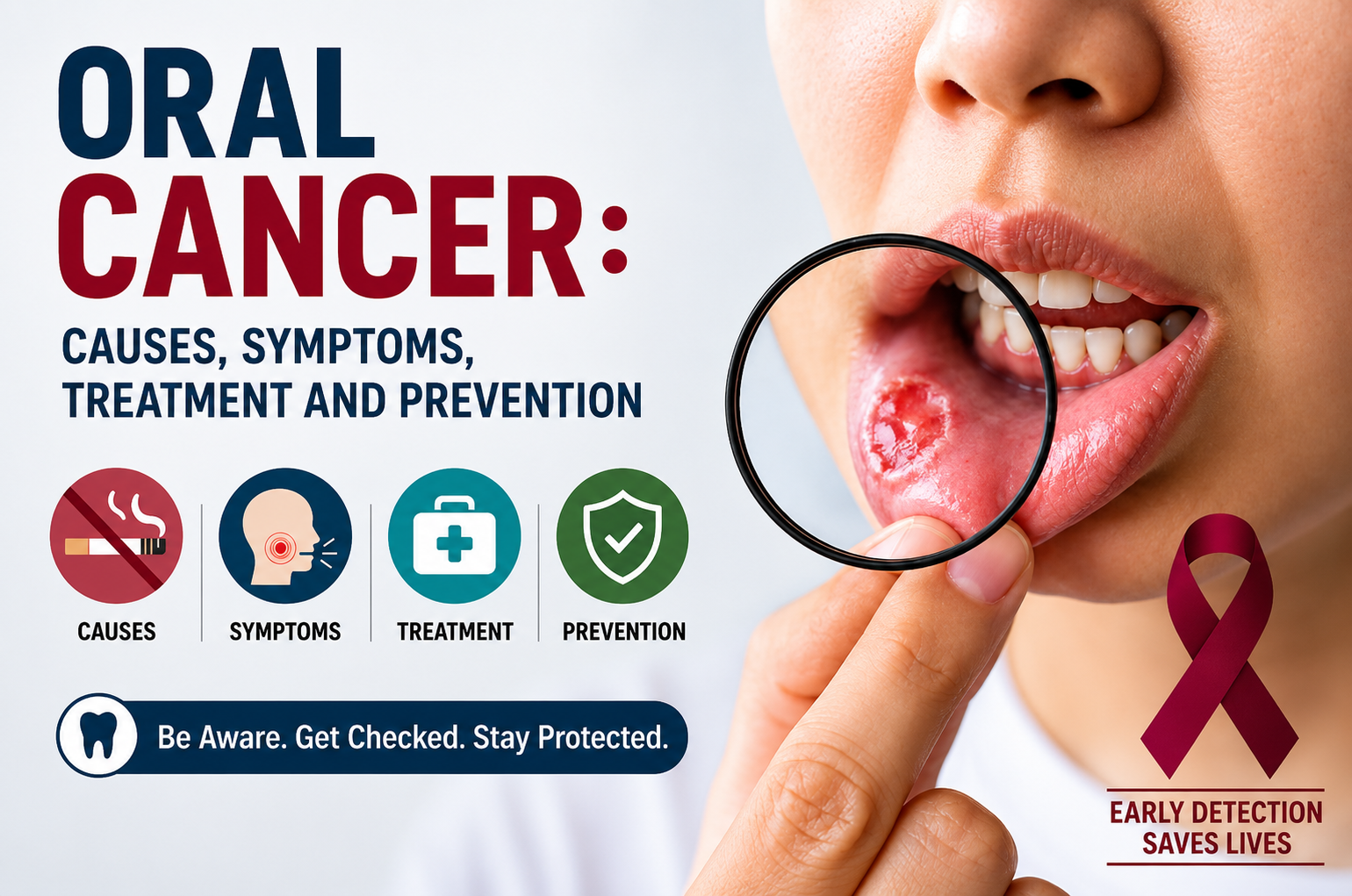
Introduction
Oral cancer is a serious health condition that affects thousands of people in India and across the world every year. It develops in the tissues of the mouth and can involve the lips, tongue, gums, inner lining of the cheeks, floor of the mouth, hard and soft palate, tonsils, and the back of the throat. When detected early, oral cancer is highly treatable, but delayed diagnosis can lead to complications and reduce treatment success rates.
Many people ignore the early signs of oral cancer because they often resemble common mouth problems such as ulcers, sores, or gum irritation. Understanding the causes, symptoms, risk factors, diagnosis, and treatment options can help individuals seek timely medical attention and improve outcomes.
What Is Oral Cancer?
Oral cancer refers to the abnormal growth of cells in the oral cavity. It is a type of head and neck cancer that most commonly begins in the squamous cells lining the mouth and throat. These cells can undergo genetic changes and multiply uncontrollably, forming a tumor.
Oral cancer can occur in different parts of the mouth, including:
- Lips
- Tongue
- Gums
- Inner cheeks
- Roof of the mouth (palate)
- Floor of the mouth
- Tonsils
- Oropharynx (back of the throat)
If left untreated, oral cancer can spread to nearby tissues, lymph nodes, and other parts of the body, making treatment more difficult.
Causes of Oral Cancer
Oral cancer develops when cells in the mouth experience genetic mutations that cause uncontrolled growth. While the exact cause is not always known, several factors significantly increase the risk.
1. Tobacco Use
Tobacco is one of the leading causes of oral cancer in India. This includes:
- Cigarette and bidi smoking
- Cigar and pipe smoking
- Chewing tobacco
- Gutka, paan masala, and other tobacco-based products
Harmful chemicals in tobacco damage the DNA of oral cells, increasing cancer risk. Chewing tobacco and gutka are especially dangerous because they stay in contact with mouth tissues for long periods.
2. Excessive Alcohol Consumption
Heavy alcohol consumption irritates the tissues of the mouth and throat. When combined with tobacco use, the risk of developing oral cancer increases dramatically.
3. Human Papillomavirus (HPV) Infection
Certain strains of HPV, particularly HPV-16, are associated with oral and throat cancers. HPV-related oral cancers have become increasingly common in recent years, even among people who do not use tobacco or alcohol.
4. Prolonged Sun Exposure
Excessive exposure to ultraviolet (UV) rays can increase the risk of lip cancer, especially in individuals who spend significant time outdoors, such as farmers, delivery workers, and construction workers.
5. Poor Oral Hygiene
Neglecting oral health can contribute to chronic irritation and inflammation, which may increase cancer risk over time. Poorly cleaned teeth, infected gums, and untreated mouth sores can create a harmful environment for oral tissues.
6. Unhealthy Diet
A diet lacking fruits and vegetables may deprive the body of antioxidants and nutrients that help protect against cancer.
7. Weakened Immune System
People with weakened immunity due to medical conditions like diabetes or HIV, or certain medications, may be more susceptible to developing oral cancer.
8. Family History
A family history of cancer may increase the likelihood of developing oral cancer due to genetic predisposition.
Risk Factors for Oral Cancer
Certain individuals are more likely to develop oral cancer than others, including those with:
- Age above 40 years
- Tobacco use (smoking or chewing)
- Alcohol abuse
- HPV infection
- Male gender
- Chronic sun exposure
- Poor nutrition
- Previous history of cancer
- Weakened immune system
- Chronic irritation from ill-fitting dentures or sharp tooth edges
Having one or more risk factors does not guarantee oral cancer, but it increases the chances of developing the disease.
Signs and Symptoms of Oral Cancer
Early-stage oral cancer may not cause significant discomfort. Recognizing warning signs is crucial for early diagnosis.
- Persistent Mouth Ulcer: A sore or ulcer that does not heal within two weeks should be evaluated.
- White or Red Patches: Unusual white patches (leukoplakia) or red patches (erythroplakia) inside the mouth can be early signs.
- Lump or Thickening: A lump, swelling, or thickened area in the mouth, tongue, or cheek may indicate abnormal tissue growth.
- Pain in the Mouth: Persistent pain, tenderness, or a burning sensation should not be ignored.
- Difficulty Swallowing: Trouble swallowing food or liquids may occur if cancer affects the throat.
- Loose Teeth: Unexpected loosening of teeth without dental disease may be a warning sign.
- Jaw Pain or Stiffness: Difficulty moving the jaw or persistent jaw pain can occur in advanced cases.
- Changes in Voice: Hoarseness that persists for several weeks may indicate cancer involving the throat.
- Ear Pain: Pain in one ear without an obvious ear infection may sometimes be linked to oral cancer.
- Unexplained Weight Loss: Sudden, unintended weight loss can occur in many types of cancer, including oral cancer.
When Should You See a Doctor?
Seek medical attention if you experience:
- Mouth sores lasting more than two weeks
- Persistent pain in the mouth
- Difficulty swallowing
- Unusual lumps or swelling
- White or red patches inside the mouth
- Persistent hoarseness
- Unexplained bleeding in the mouth
Early consultation can significantly improve treatment outcomes.
How Is Oral Cancer Diagnosed?
Physical Examination
The doctor examines the mouth, tongue, gums, throat, and neck for abnormal lesions, lumps, or swelling.
Biopsy
A biopsy is the most reliable method for diagnosing oral cancer. A small tissue sample is removed and examined under a microscope to confirm whether cancer cells are present.
Imaging Tests
Doctors may recommend imaging studies such as:
- X-rays
- CT scan
- MRI scan
- PET scan
These tests help determine the size of the tumor and whether cancer has spread.
Endoscopy
An endoscope may be used to examine deeper areas of the throat and airway.
Stages of Oral Cancer
Oral cancer is generally categorized into stages based on tumor size and spread:
- Stage I: Small tumor, confined to one area, no lymph node involvement
- Stage II: Larger tumor, still localized
- Stage III: Cancer has spread to nearby lymph nodes
- Stage IV: Advanced stage; cancer has spread to nearby structures or distant organs
Staging helps doctors determine the most effective treatment plan.
Treatment Options for Oral Cancer
Treatment depends on the cancer stage, location, overall health, and patient preferences.
1. Surgery
Surgery is often the primary treatment for oral cancer. Procedures may include:
- Removal of the tumor
- Removal of affected lymph nodes
- Reconstructive surgery for facial or oral structures
Early-stage cancers can often be successfully treated with surgery alone.
2. Radiation Therapy
Radiation therapy uses high-energy beams to destroy cancer cells. It is effective for early-stage cancer, can be used after surgery, and helps reduce recurrence risk.
3. Chemotherapy
Chemotherapy uses medications to kill cancer cells or stop their growth. It is often combined with radiation therapy, used for advanced-stage cancer, or when cancer has spread beyond the mouth.
4. Targeted Therapy
Targeted therapy focuses on specific molecules involved in cancer growth, offering more precise treatment with reduced damage to healthy cells.
5. Immunotherapy
Immunotherapy helps the body's immune system recognize and attack cancer cells. This treatment may be recommended for advanced or recurrent oral cancer cases.
Recovery After Oral Cancer Treatment
Recovery varies depending on the treatment received. Patients may experience:
- Difficulty speaking
- Difficulty eating
- Swallowing problems
- Dry mouth
- Fatigue
Rehabilitation programs often include:
- Speech therapy
- Nutritional counseling
- Physical therapy
- Psychological support
Regular follow-up visits are essential to monitor recovery and detect recurrence early.
Can Oral Cancer Be Prevented?
Although not all cases can be prevented, several lifestyle changes can significantly reduce the risk.
- Avoid Tobacco: Quit smoking and avoid smokeless tobacco like gutka, paan masala, and chewing tobacco.
- Limit Alcohol Intake: Reduce alcohol consumption.
- Maintain Good Oral Hygiene: Brush twice daily, floss, and visit a dentist regularly.
- Eat a Healthy Diet: Consume plenty of fruits, vegetables, whole grains, and antioxidant-rich foods.
- Protect Your Lips: Use lip balm with sun protection during extended sun exposure.
- Get Regular Dental Checkups: Dentists can identify suspicious lesions before symptoms become severe.
- Consider HPV Vaccination: This may help reduce the risk of HPV-related oral cancers.
Conclusion
Oral cancer is a potentially life-threatening disease, but early diagnosis and timely treatment can greatly improve outcomes. Common risk factors such as tobacco use, alcohol consumption, HPV infection, and poor oral hygiene play a significant role in its development. Recognizing symptoms such as persistent mouth ulcers, red or white patches, lumps, and difficulty swallowing can lead to earlier detection and more effective treatment. If you notice any unusual changes in your mouth that persist, consult a healthcare professional promptly for evaluation and guidance.
FAQs
1. What is the first sign of oral cancer?
A persistent mouth sore, white or red patch, or lump inside the mouth that does not heal within two weeks may be an early sign of oral cancer.
2. Is oral cancer curable?
Yes. Oral cancer is often highly treatable and potentially curable when detected in its early stages.
3. Who is at the highest risk of oral cancer?
People who use tobacco, consume excessive alcohol, have HPV infection, or are over the age of 40 are at higher risk.
4. Can oral cancer occur in non-smokers?
Yes. Although tobacco is a major risk factor, oral cancer can also develop in non-smokers due to HPV infection, genetics, or other factors.
5. How is oral cancer diagnosed?
Diagnosis typically involves a physical examination, biopsy, imaging tests such as CT or MRI scans, and sometimes endoscopy.
6. How can I reduce my risk of oral cancer?
Avoid tobacco products, limit alcohol consumption, maintain good oral hygiene, eat a healthy diet, protect your lips from excessive sun exposure, and schedule regular dental checkups.